
Power interruptions, voltage fluctuations, and rising electricity costs are common
challenges faced by households and businesses across Sri Lanka. Whether you work from
home, run a retail shop, manage an office, or operate critical equipment, having a reliable
backup power solution is essential for productivity and safety.
This comprehensive guide explains the differences between UPS systems, inverters, and
solar backup solutions. It provides practical insights into installation costs, performance,
maintenance, and suitability for Sri Lankan conditions. By understanding these options,
consumers and businesses can make informed decisions to ensure uninterrupted power
supply and long-term savings.
Why Backup Power Solutions Are Important in Sri Lanka
Power reliability is critical for daily life and business operations. Unexpected power failures
can cause data loss, equipment damage, business disruption, and reduced productivity.
Key benefits of backup power systems include:
- Continuous operation during power outages
- Protection of electronic devices from voltage fluctuations
- Improved productivity and business continuity
- Enhanced safety and comfort at home
- Reduced downtime for IT and communication systems
What Is a UPS (Uninterruptible Power Supply)?
A UPS is a device that provides instant backup power when electricity fails. It is commonly
used for computers, servers, routers, and security systems. UPS units provide short-term
power to allow safe shutdown of equipment or continued operation for a limited period.
What Is an Inverter?
An inverter converts battery power into electricity to supply power during outages.
Inverters are widely used in homes and offices to operate lights, fans, televisions, and small
appliances. They provide longer backup duration than UPS systems but require a short
switching time when power fails.
What Is Solar Backup Power?
Solar backup systems use solar panels to generate electricity from sunlight and store energy
in batteries. These systems provide renewable energy and can reduce electricity bills
significantly. Solar backup is ideal for homes and businesses seeking long-term energy
independence and sustainability.
Key Differences Between UPS, Inverter, and Solar Systems
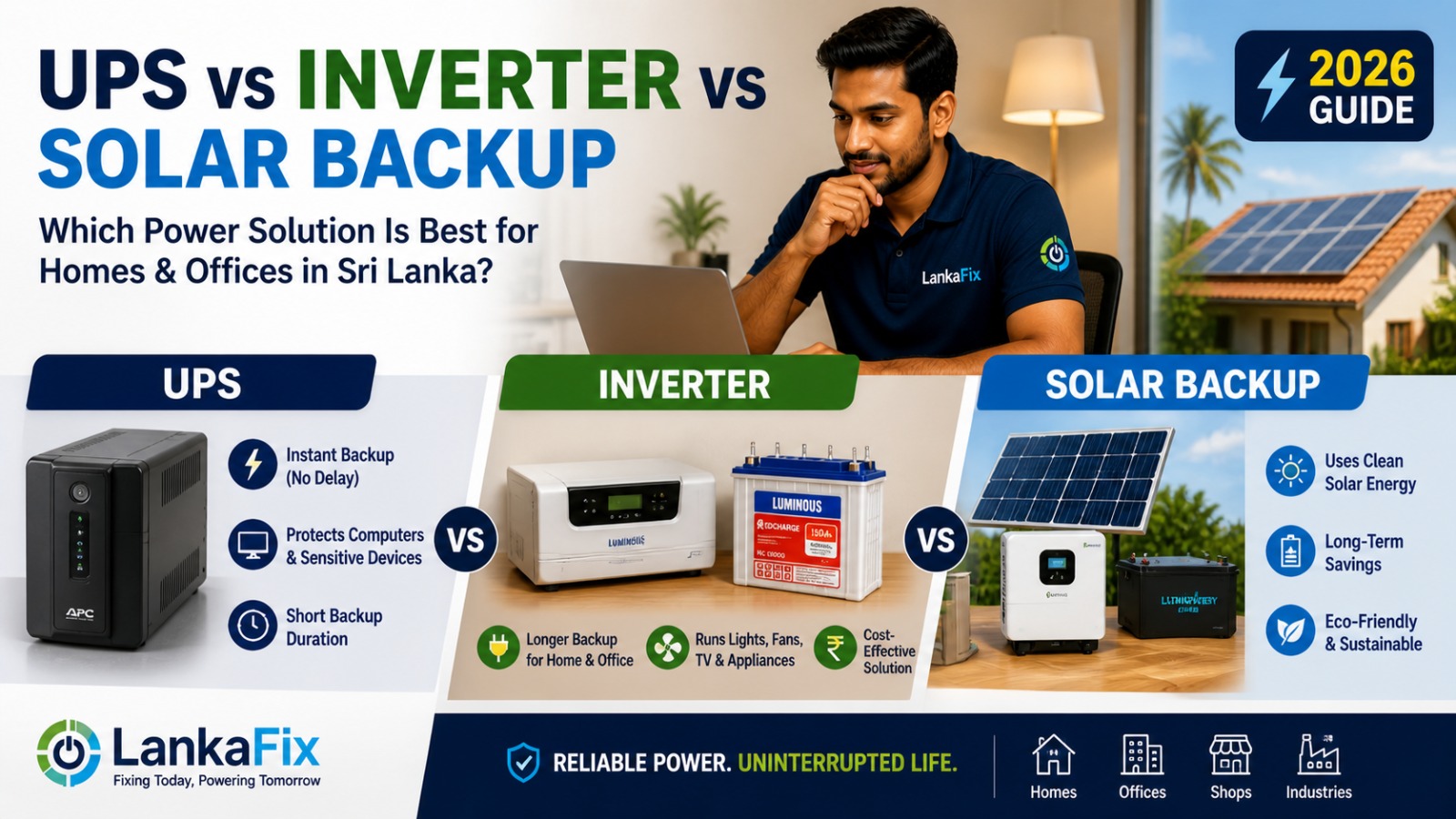
UPS: - Instant power backup (no delay)
- Short backup duration
- Ideal for computers and sensitive electronics
Inverter: - Moderate switching delay
- Longer backup duration
- Suitable for home appliances and office equipment
Solar: - Uses renewable energy
- Long-term cost savings
- Environmentally friendly solution
Estimated Cost of Backup Power Solutions in Sri Lanka (2026)
Typical installation costs may include: - Basic UPS system: LKR 15,000 – 45,000
- Home inverter system: LKR 65,000 – 180,000
- Solar backup system (small home): LKR 250,000 – 650,000
- Solar system (commercial setup): LKR 750,000 – 2,500,000
Note: Prices vary depending on capacity, battery type, brand, and installation requirements.
Which Power Solution Is Best for Your Needs?
Choose a UPS if: - You need instant backup for computers or servers
- You require protection from sudden shutdowns
- Backup duration requirement is short
Choose an Inverter if: - You want backup power for lights and household appliances
- You need longer backup duration
- You want a cost-effective solution
Choose Solar if: - You want to reduce electricity bills
- You require long-term backup power
- You prefer environmentally friendly energy
Factors to Consider Before Installing a Backup Power System
- Total power consumption requirements
- Duration of backup needed
- Available installation space
- Budget and long-term cost savings
- Type of equipment to be powered
- Maintenance and battery replacement costs
Maintenance Tips for Backup Power Systems
Regular maintenance ensures reliability and safety: - Check battery condition periodically
- Keep equipment in a cool and dry environment
- Schedule professional inspection annually
- Replace batteries as recommended by manufacturer
- Ensure proper ventilation around equipment
Professional Recommendation for Sri Lankan Homes and Businesses
Selecting the right backup power solution depends on your usage pattern, budget, and
reliability requirements. Consulting a qualified technician helps ensure proper system
sizing, safe installation, and long-term performance. Investing in a reliable backup system
protects valuable equipment and supports uninterrupted daily operations.
Conclusion
UPS, inverter, and solar systems each serve different purposes. Understanding their
advantages, costs, and applications helps consumers choose the most suitable solution.
With proper planning and professional installation, backup power systems can provide
peace of mind, productivity, and energy savings for years to come.